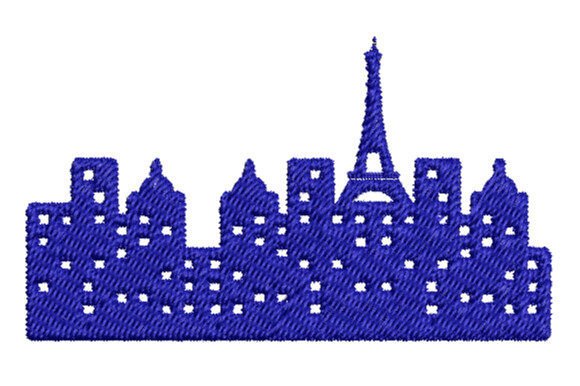
Paris: A Whimsical Embroidery Design That Delivers Charm—Not Clutter
First Impressions: Light, Lyrical, and Instantly Recognizable
When I opened the Paris machine embroidery design for the first time, I didn’t see a cliché Eiffel Tower or overdone fleur-de-lis. Instead, I found something quieter but more confident: clean silhouettes, balanced negative space, and a gentle rhythm in the line work—like a sketch you’d find in a Parisian café notebook. It’s not loud, but it’s unmistakably European in spirit: refined, approachable, and just whimsical enough to feel handmade without sacrificing polish. As a designer who tests dozens of embroidery files each month for client projects and my own craft business, that balance is rare—and valuable.
A Real-World Test: Stitching Paris on a Linen-Cotton Kitchen Towel
Last week, I used Paris on a natural linen-cotton blend tea towel for a small-batch boutique order. The goal? A subtle yet memorable accent—not a logo, not a statement, but a quiet nod to travel, taste, and texture. I chose a soft ecru thread on off-white fabric, paired with medium-weight tear-away stabilizer. The result held up beautifully: no puckering, no skipped stitches, and the satin stitch details (especially the delicate arches and curved flourishes) read clearly even at 3.5 inches wide. Customers commented not just on the “cuteness,” but on how *intentional* it felt—like the design had been chosen, not slapped on.
Where Paris Shines—And Where It Needs Thoughtful Placement
Paris works especially well for:
- Custom apparel on structured fabrics—think sweatshirt cuffs, pocket corners, or back yokes where its lightness won’t compete with heavy graphics;
- Tote bag designs that lean into artisanal branding (not mass-market); its modest scale and open layout avoid visual fatigue on large canvas surfaces;
- Baby embroidery on onesies or burp cloths—its soft edges and lack of tiny interior details mean fewer snag risks and better wash durability;
- Holiday embroidery for French-themed gifts (a lavender sachet, a ceramic mug sleeve, a linen napkin set)—it reads as elegant, not kitschy;
- Embroidered patch applications, especially when fused onto denim jackets or canvas aprons—the shape holds its integrity through layering and wear.
That said, Paris isn’t a one-size-fits-all solution. Use caution on:
- Stretchy fabric like jersey or ribbed knits—without proper cut-away stabilizer and careful hooping, the curves can distort;
- Dark fabric unless you test thread contrast first; some of the finer running stitch accents may fade visually without a bright or metallic thread;
- Curved surfaces like caps or baby bonnets—its horizontal flow doesn’t wrap naturally, so placement must be intentional (e.g., front panel only, not crown);
- Thin or sheer fabric like voile or lightweight rayon—stitch density matters here, and while Paris avoids excessive fill, always check the file’s underlay and trim points before committing.
What It Adds to Your Finished Product—Beyond Aesthetics
As an Etsy seller and small shop product developer, I pay attention to what a design does for perceived value—not just how it looks, but how it makes the buyer *feel*. Paris elevates a simple kitchen towel into a curated gift. It turns a plain cotton tote into something customers photograph and tag. It adds quiet confidence to a personalized gift, especially for travelers, Francophiles, or anyone drawn to understated European charm. Unlike busier Europe-themed embroidery files I’ve tested, Paris doesn’t scream “theme park souvenir.” It whispers “I know what I like.” That nuance builds trust—especially for handmade product buyers who scan for authenticity over flash.
Practical Designer Notes Before You Stitch
Before using Paris in your next embroidery project—whether for client work, craft fair inventory, or digital embroidery file listings—here’s what I recommend:
- Test on scrap fabric first, especially if you’re using textured or blended materials—it’s easy to assume a design will translate, but Paris’s graceful lines rely on consistent tension;
- Review stitch density in your embroidery software; if the file includes dense fill areas (even subtle ones), consider adjusting for delicate fabrics;
- Confirm hoop size compatibility; while Paris feels versatile, its proportions suggest optimal use in 4x4” or larger hoops—don’t force it into tight spaces without checking corner clearance;
- Inspect small details like stem ends or arch termini—they’re where quality shows (or falters) in commercial embroidery;
- Test black-and-white mockups before finalizing color palettes; this design’s strength lies in silhouette, so grayscale previews reveal clarity issues faster than color;
- Use appropriate stabilizer: medium tear-away for stable wovens, cut-away for knits, and lightweight water-soluble for sheer overlays;
- Verify licensing terms before selling finished items or bundling Paris into digital product kits—this is essential for Etsy sellers and digital embroidery file resellers.
Final Thought: Paris Isn’t Just a Design—It’s a Design Decision
Choosing Paris says something about your brand voice: thoughtful, unhurried, and rooted in real craft—not trend-chasing. It fits seamlessly into a holiday embroidery collection, a nursery decor line, or a boutique’s signature tote bag series. It’s equally at home on a custom sweatshirt for a Paris study-abroad grad or stitched subtly onto a linen pillow cover for a wedding gift. What makes it stand out isn’t complexity—it’s cohesion. Every curve, every pause, every stitch serves the mood. And in a market flooded with generic embroidery files, that kind of intentionality is the most valuable thread of all.