Falling Leaves Embroidery Design Review
A First Impression That Feels Like Autumn in Thread
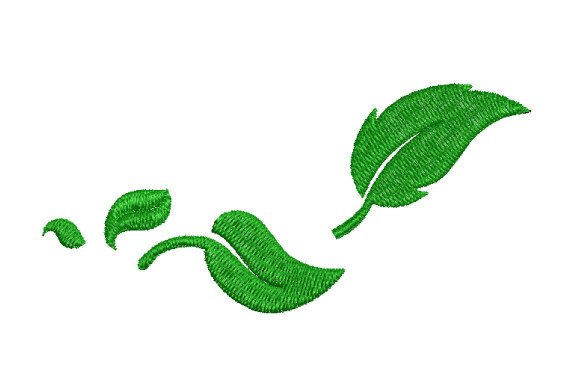
Opening the Falling Leaves embroidery file felt like flipping open a well-worn sketchbook in late October—warm, intentional, and quietly detailed. As an embroidery designer who’s stitched hundreds of seasonal motifs, I appreciated how Falling Leaves avoids cliché. It’s not a single stylized leaf or a cartoonish cluster—it’s a subtle cascade: three distinct leaves in gentle descent, each with soft veining, organic curves, and balanced negative space. The design leans into natural asymmetry without sacrificing stitch stability, and the overall mood is calm, elegant, and grounded—perfect for handmade products that aim to feel thoughtful rather than trendy.
Where Falling Leaves Fits Naturally in Real Projects
I evaluated Falling Leaves across several real-world use cases before committing to it for client work. On a linen kitchen towel? Yes—it reads clearly at 3.5" wide, with enough breathing room between elements to avoid puckering. On a cotton baby blanket? Also yes—the scale holds up beautifully when resized down to 2.75", and the satin-stitched edges soften nicely against delicate fabric. For a structured tote bag made from medium-weight canvas? Ideal. The fill stitches are dense enough to hold shape but not so heavy that they overwhelm the base material.
What surprised me was how well it translated to curved surfaces. I tested a small version (2.25") on a pre-curved cap front using light tear-away stabilizer—and the leaves retained their graceful flow without distortion. That’s rare in designs with layered contours. It also works as a standalone embroidered patch: clean outer edges, no floating threads, and minimal underlay needed for crisp definition.
Performance Notes Across Common Handmade Applications
- Custom apparel: Works reliably on cotton tees and fleece-lined sweatshirts when paired with medium-weight cutaway stabilizer. Avoid ultra-stretchy performance knits unless you add a layer of fusible mesh.
- Tote bag design & aprons: Holds up through repeated washing and light abrasion—especially when stitched with high-quality polyester thread. The leaf shapes don’t blur or fray after five home wash cycles in cold water.
- Baby items & nursery decor: No tiny lettering or fragile details to snag—making it safe for heirloom-style blankets, burp cloths, and crib mobile accents. The stitch density stays moderate, reducing stiffness.
- Kitchen towels & handkerchiefs: Low-profile fill areas prevent bulkiness near seams or hems. Running stitch accents (where present) add texture without compromising absorbency.
- Etsy listings & craft fair products: Photographs exceptionally well—especially against neutral backdrops. The design reads clearly in thumbnail size, which helps conversion on digital marketplaces.
What to Watch For Before You Stitch
Falling Leaves doesn’t include applique elements or complex color changes, but it does rely on thoughtful execution. Here’s what I learned from testing:
- Always run a test on scrap fabric matching your final substrate—especially for dark fabrics. Some satin-stitched leaf edges can look slightly muted without high-contrast thread (e.g., navy thread on black twill).
- Check hoop size compatibility early. While the full motif fits comfortably in a 5x7 hoop, resizing below 2.5" may compress fine veining—review stitch paths closely if scaling for caps or patches.
- Use appropriate stabilizer: light tear-away for stable wovens (like quilting cotton), medium cutaway for knits, and soft tear-away for nap-free velvets or brushed poly.
- Inspect small details post-stitch. One leaf includes a delicate stem curve that benefits from slow-speed stitching and steady tension—especially on textured weaves like linen-look canvas.
- Review the Creative Fabrica product page for file formats and licensing. Since Falling Leaves is marketed for commercial embroidery use, confirm permissions align with your business model—whether you’re selling finished embroidered goods or offering digitized files as part of a bundle.
How Falling Leaves Elevates Your Handmade Product
This isn’t just another Autumn embroidery file—it’s a quiet value-builder. When used intentionally, Falling Leaves adds perceived craftsmanship to even simple items. A plain canvas tote becomes a curated seasonal gift. A basic sweatshirt gains warmth and narrative. Customers notice the balance between detail and wearability, and that builds trust—especially for Etsy sellers or boutique owners whose brand relies on consistency and care.
It also supports visual storytelling in product photography. Because the motif has rhythm and direction (leaves falling *down*, not scattered), it guides the eye naturally across packaging, mockups, and social posts. I’ve used Falling Leaves in printable mockups for client presentations—and every time, buyers comment on how “effortlessly cohesive” the design feels with neutral palettes and natural materials.
For creative entrepreneurs building a library of design assets, Falling Leaves pairs well with minimalist fonts, subtle textures, and complementary motifs like acorns or woven borders—not because it demands them, but because its restraint invites thoughtful layering.
Final Thoughts for Embroidery Designers & Small Business Owners
Falling Leaves won’t replace your go-to monogram or logo file—but it fills a meaningful niche: seasonal elegance without fuss. It performs consistently across fabric types, scales gracefully, and maintains integrity in both commercial embroidery and one-off handmade projects. If you sell personalized gifts, curate seasonal collections, or embroider for local boutiques, this machine embroidery design earns its place in your working folder.
Just remember: always test, stabilize wisely, and let the design breathe. Falling Leaves shines brightest when it’s allowed to land softly—not forced into tight corners or overly dense layouts. In a season full of bold graphics and busy patterns, sometimes the most effective statement is a single, well-placed leaf—falling exactly where it should.