Beautiful Heart Design 11: A Thoughtful Stitch Test
As a designer who’s stitched hundreds of heart motifs—from boutique baby onesies to wedding gift towels—I approached Beautiful Heart Design 11 with quiet curiosity, not expectation. I wasn’t looking for “cute.” I was looking for workable: something that holds its shape on a textured sweatshirt, reads clearly on a linen tea towel, and feels intentional—not generic—when stitched onto a personalized tote bag for a local shop launch.
First Impressions: Soft, Sincere, and Surprisingly Versatile
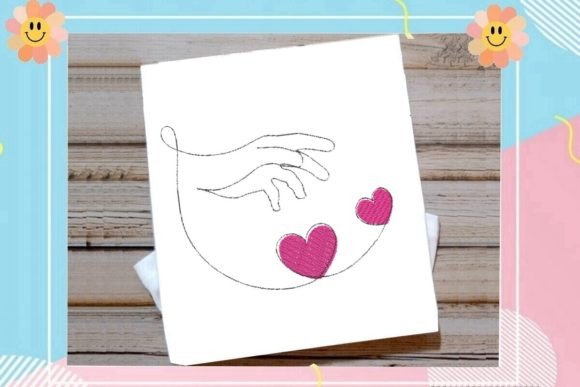
The moment I opened the embroidery file, I noticed how gently the outline flows—no sharp corners, no forced symmetry. It’s not a Valentine’s cliché; it’s a quietly confident heart, slightly asymmetrical in a way that feels handmade, not machine-perfect. The inner detail is subtle: a light satin stitch curve at the base, a whisper of fill stitch radiating outward like soft breath. It doesn’t shout. It invites touch. That matters—especially when you’re stitching for real people who’ll hold, wash, and live with the finished product.
I immediately pictured it centered on a natural cotton apron for a small-batch kitchen brand. Not too big, not too fussy—just enough presence to say “crafted with care” without overwhelming the fabric’s texture. That’s where Beautiful Heart Design 11 shines: in context, not isolation.
Where It Lives Well (and Where It Needs Care)
Works beautifully on:
- Medium-weight woven fabrics—like cotton twill tote bags, linen pillow covers, or unbleached tea towels. The stitch density feels balanced: enough coverage to read clearly, but open enough to avoid stiffness.
- Custom apparel with gentle curves—think crewneck sweatshirts or relaxed-fit tees. The heart’s rounded form adapts well to slight fabric movement without distorting.
- Baby embroidery projects, especially on knit onesies or swaddle blankets. Its smooth edges and lack of tiny interior details mean fewer snag points—and less risk of irritation against delicate skin.
- Holiday or wedding gifts where warmth matters more than flash: embroidered handkerchiefs, napkin sets, or keepsake sachets. It reads as personal, not promotional.
Use thoughtfully on:
- Stretchy or thin fabrics—like jersey knits or lightweight voile. Without proper stabilizer (a medium-weight cutaway or tear-away hybrid), the satin stitch areas may ripple or shift. Always test first.
- Dark or highly textured surfaces—such as charcoal fleece or bouclé yarn-dyed canvas. The design’s gentle contrast relies on thread color choice. A high-contrast thread (e.g., cream on black) helps, but avoid ultra-fine details if your fabric swallows them.
- Caps or curved hoops. While the shape is forgiving, the lower curve sits close to the hoop edge on smaller hoops. Confirm your minimum hoop size before hooping—especially if you're stitching for a craft fair batch of baseball caps.
- Frequent-wash items like kids’ clothing or kitchen linens. The satin stitch base holds up well—but check stitch density in the file preview. If it looks overly dense in tight zones, consider reducing underlay or adding a light topping stabilizer for longevity.
What It Adds to Your Handmade Product (Beyond the Obvious)
A heart motif can easily feel sentimental or saccharine. Beautiful Heart Design 11 avoids both traps. Its quiet confidence builds trust—not just with end customers, but with your own standards. When I stitched it onto a sample organic-cotton tote for a local florist’s pop-up, customers paused. Not because it was loud, but because it felt considered. That pause? That’s value.
For Etsy sellers and small shop owners, that translates directly: better photo mockups, stronger perceived quality in listings, and repeat buyers who recognize your signature attention to detail. It also layers well—pair it with a single-line monogram or minimalist date for wedding favors, or let it stand alone on a nursery mobile banner. It doesn’t compete. It complements.
Practical Designer Notes Before You Stitch
This isn’t just about loading the file and going. Here’s what I do—every time—with a new embroidery file like Beautiful Heart Design 11:
- Test on scrap fabric—same type and weight as your final project. Watch how the satin stitch lays on grain vs. bias.
- Check thread color contrast in natural light. What reads well on screen may disappear on oat-colored linen.
- Review stitch density in your embroidery software. Look for any overlapping fill zones or overly tight satin columns—these cause puckering on delicate fabrics.
- Confirm hoop compatibility. Does it fit comfortably within your standard 4x4 or 5x7 hoop? If it’s borderline, adjust placement or choose stabilizer accordingly.
- Inspect small details at 200% zoom—especially the tip and base curves. Are they clean? Or do they feather unnaturally?
- Mock it in black and white first. If it loses clarity without color, reconsider thread selection or background fabric.
- Use appropriate stabilizer. For woven fabrics: medium tear-away. For knits: cutaway + topping. For towels: heavy cutaway + water-soluble topping.
- Verify licensing. Since this is listed as a Freebie, double-check whether it’s cleared for commercial use—especially if you’re selling finished embroidered patches, custom apparel, or digital embroidery files as part of your craft business.
Final Thought: A Quiet Anchor in Your Design Toolkit
Beautiful Heart Design 11 won’t dominate your portfolio—but it might become your go-to for moments that need sincerity over spectacle. It fits seamlessly into holiday embroidery collections, baby embroidery bundles, and small shop branding kits. It’s the kind of machine embroidery design that makes customers say, “Who made this?” not “Where’d you get that?”
If you’re an embroidery designer building a library of reliable, emotionally resonant assets—or a craft business owner curating designs that reflect your brand’s quiet strength—this one earns space. Not because it’s flashy, but because it’s finished: thoughtful in shape, respectful of fabric, and ready for real life.